still
life
Gallery
of Photography, Dublin
MacLaurin Gallery,
Scotland
ICP, New York
Art Exchange, New York
Washington Square East Galleries, New York
The
unexpected presence of the anomalous human body is at once familiar and
alien. As spectators, the sight of strange corporeal figurations inspires
contradictory responses: recognition and denial, fascination and fear,
identification and rejection. When a form departs from our preferences
and desired fantasies, we gaze with unrest and suspicion. Comforting distinctions
between what is human and is not become confused.
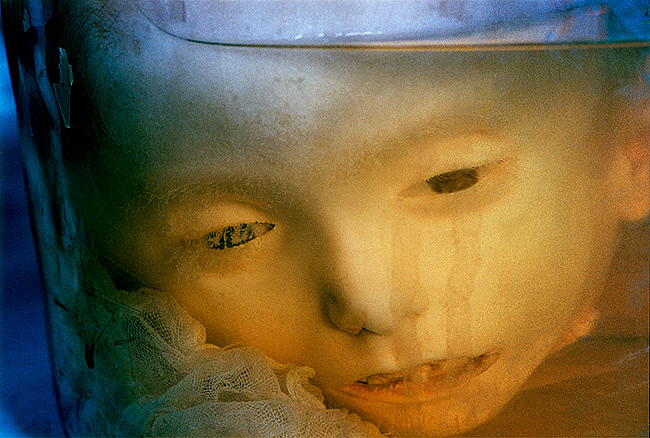
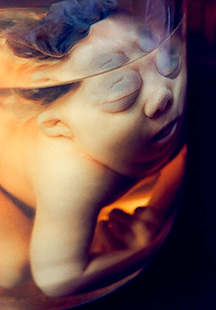
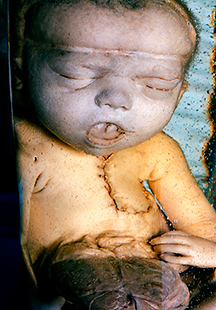
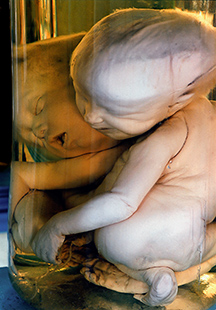
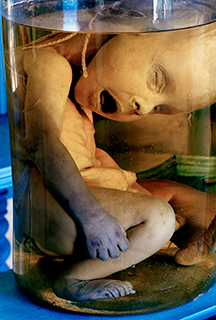
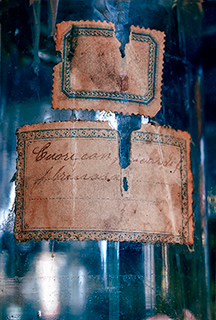
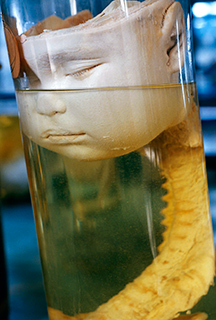
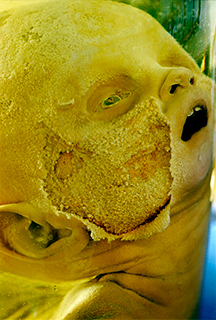
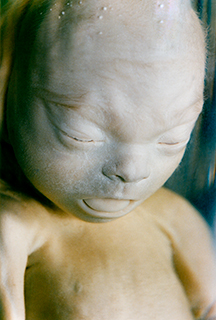
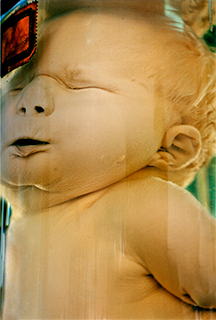
The images in Still Life document congenital malformations from international
medical collections. Such collections of specimens, classified as monsters,
were used for research in universities and teaching hospitals from the
mid-nineteenth century onwards. Stored in sealed glass jars and preserved
in formaldehyde, these tender beings became rationalised within the laboratory
and the textbook. What was once the prodigious monster, the curiosity
of nature, the ominous marvel or the divine foreboding, became the pathologised
other, the abnormal.
In
the discourse of Teratology, the science of monsters, we each occupy our
own solitary site of discrimination. We rely on acquired vocabularies
from science and superstition and inconsistent definitions of an elusive
ideal. We enter a realm of troubled fascination. Our disquiet lies in
the recognition that nature's fearful asymmetry is at the heart of our
own identity. Images of what we have denied turn towards us.
35
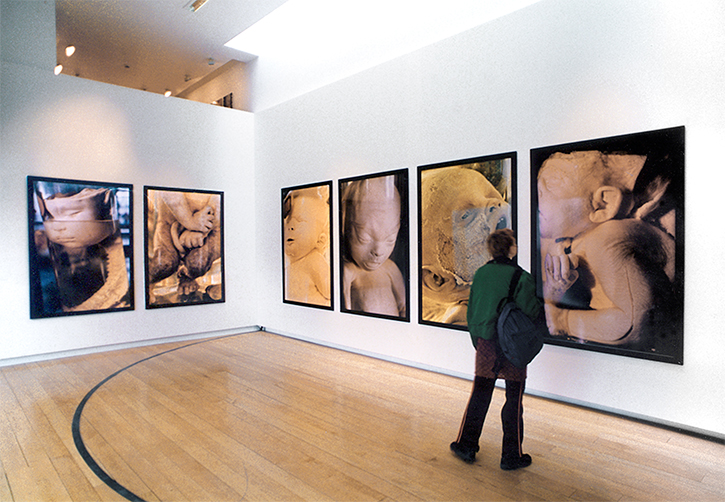
Chromogenic hand prints 24 x 20 in (51 X 61cm) and 6 x 4ft (183 x 122cm). Edition of 2.
Triptych
and wall text, 2 x 15ft (51 x 458cm) - variable dimensions. Edition of 1.
Video/Sound. The Case of Miss Pozetti. 6.15mins. Basement. 4.30mins. 2010.
Still Life is the first work in the Collected Body trilogy. Followed by Future Nature and Vial Memory, the works explore the medical and zoological archive as shrine and the human and animal body on display.
Collection of the artist, Morris Collection Detroit & Museum of Pathological Anatomy, Florence.
|